Discovering Fufu: A Deep Dive into Africa’s Flavorful Staple and Its Unique Taste
Introduction
Fufu is an African-style dumpling that is predominantly consumed in Western and Central African nations, each possessing its unique recipe. It is made from cassava and plantain and is accompanied by soup.
Fufu is a well-known dish in the following nations: Nigeria, Ghana, Sierra Leone, Ivory Coast, the Central African Republic, Togo, Cameroon, the Congo, the Democratic Republic of the Congo, Guinea, Benin, Gabon, and Liberia.
Fufu is now also found in the Caribbean, which we will delve into later in the article as the recipe varies significantly.
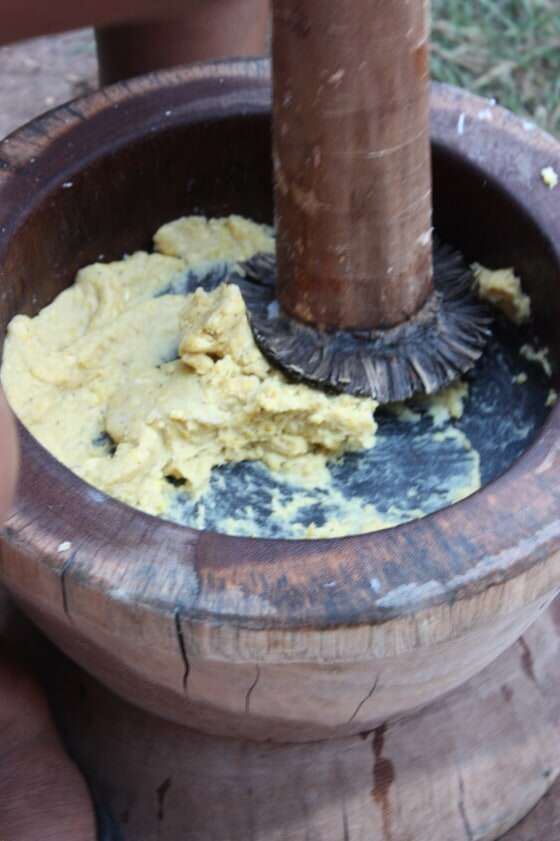
Fufu is a starchy African dish with a pliable, mashed potato-like texture typically served as a side to soups or stews. It is a fundamental component in many West African and Caribbean cuisines. It is often prepared from cassava root, yam, or other starchy substances crushed with a pestle and mortar and mixed with a bit of water to create a smooth, elastic dough.
Due to its prevalence across various regions, numerous local varieties exist. It can be made using diverse ingredients, such as cassava, yam, eba, green plantains, amala, cocoyam (malanga), breadfruit, corn, semolina, or rice, each providing a slightly unique texture. In several Caribbean nations, bacon or lard may be included, whereas fermented cassava root might be utilized in Nigeria.
Fufu: Origins and History
Fufu is a staple across West and Central Africa and the Caribbean and originates from the Twi language spoken in Ghana and Ivory Coast, meaning “mash” or “mix.” Fufu is a slightly tart, spongy dough created from boiling and crushing starchy crops such as plantains, cassava, and yams — or a combination of two or more — in a large mortar with a pestle. Numerous variations of fufu exist, with each country, like Nigeria, Cameroon, Togo, Benin, and Sierra Leone, having its preferred recipe. However, it was first created in Ghana after the Portuguese introduced cassava in the 16th century.
What is Fufu Composed Of?
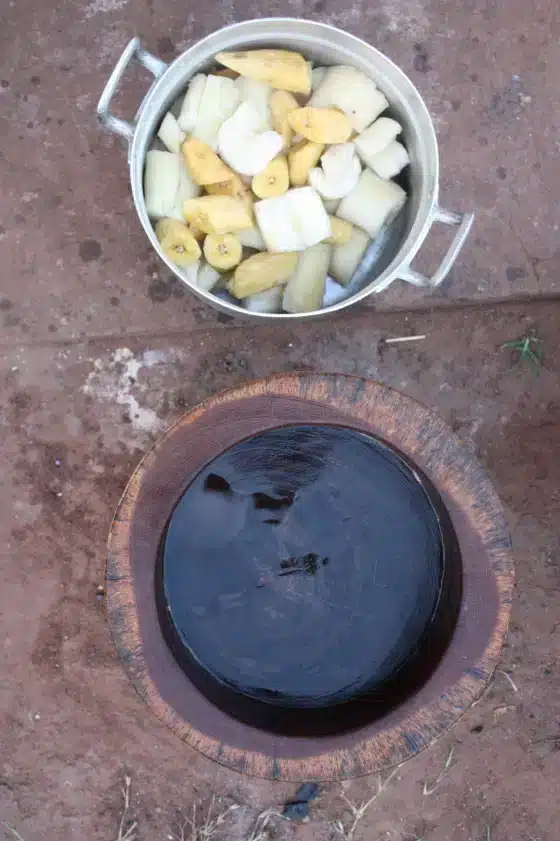
Fufu is a mash crafted from yuca, yams, or plantains.
Fufu is a dough made from boiled and crushed starchy ground sources such as plantains, cassava, malanga, or a combination of these.
It is a favored dish throughout most of West Africa. Depending on the availability, enslaved people brought it to the Americas and adapted it into Caribbean cuisines.
What is Nigerian fufu, and what is it composed of?
Cassava, commonly referred to as yuca, is used in the preparation of foofoo. Starchy root vegetables such as sweet potatoes, russet potatoes, and yams serve as examples.
It can be fried, roasted, and served in the same manner as potatoes, but when transformed into fufu, it becomes exceptionally smooth, doughy, and elastic.
Nigerian fufu is mainly crafted from cassava dough, whereas Ghanaian fufu combines cassava and plantain.
It is a widely consumed Ghanaian staple made entirely from green plantain.
Most African/Asian shops in the UK stock plantain fufu flour, marketed as fufu to customers.
Conversely, water fufu is produced from fermented cassava, known as Placali, typically found in the freezer section; no need to worry, it’s identical to Fermented fufu.
What is the composition of yam fufu?
In the traditional fufu preparation, natural yams are boiled and crushed in a wooden mortar and pestle until smooth and sticky like dough.
The tangy and sour flavor of pounded yam pairs well with hearty, well-seasoned meat and vegetable soup.
If cocoyams are accessible in your area, you can add another fufu recipe to your Nigerian cuisine.
Cassava Fufu Recipe (Nigerian Fufu): How to Create It
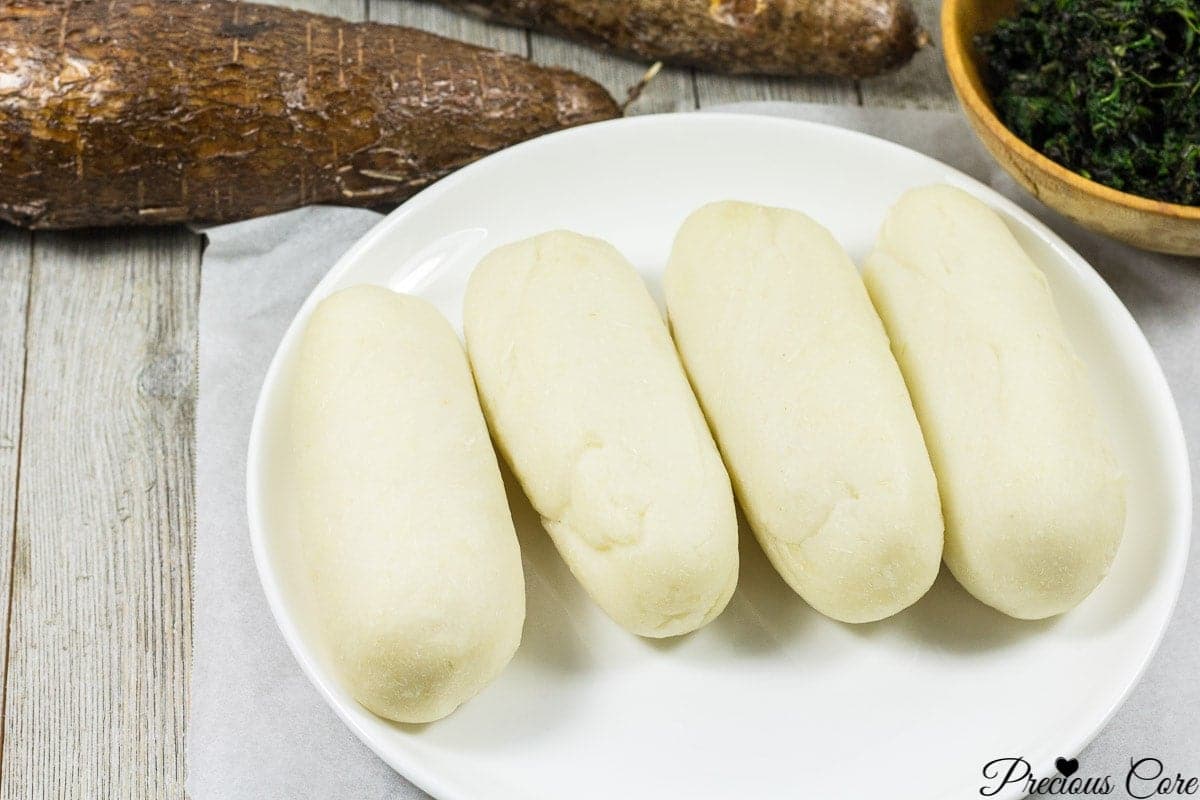
Cassava fufu is a renowned dish in Nigeria and other West African countries, commonly accompanied by soups like okra soup, egusi soup, and efo riro. I will guide you through the procedure with my step-by-step instructions.
I must emphasize that creating fufu from scratch at home requires dedication. It will demand some effort and time on your part, but it will be rewarding, especially for those in the diaspora.
It’s not something I regularly make due to the time and effort involved. HOWEVER, when I crave nostalgia, I prepare it.
Step 1: Place the cassava dough/pulp in a sturdy pot and break it into smaller pieces. Mix the water with your hands until the blend is smooth and free of clumps. The consistency should resemble thick double cream.
Step 2: Lower the heat to medium-low and begin stirring vigorously; the fufu will start transitioning from white to off white. Continuous stirring is essential to ensure proper grinding.
The fufu will become tough to stir and stretchy; add warm water to the mixture as needed. Cook for 5 to 10 minutes, covered, to allow the steam to properly soften the fufu.
You will know it’s finished when the fufu is no longer white, resulting in an off-white hue. Cooked fufu should be divided into bowls or wrapped in plastic wrap until ready to serve. Accompany it with your favorite soup.
What does fufu taste like?
The flavor of fufu varies based on the ingredients used in its preparation, but generally, it presents a mild, slightly sour taste that has been likened to both sweet potatoes and standard potatoes. Its subtle flavor makes it an excellent pairing for rich, hearty African dishes.
What to Serve with Fufu
Fufu is typically paired with African soups and stews that feature meat, fish, vegetables, okra, peanut butter, palm oil, melon seeds, or sweet potato leaves. Popular choices include groundnut soup, palm nut soup, green vegetable soup, and egusi, made with ground melon seeds and leafy vegetables.