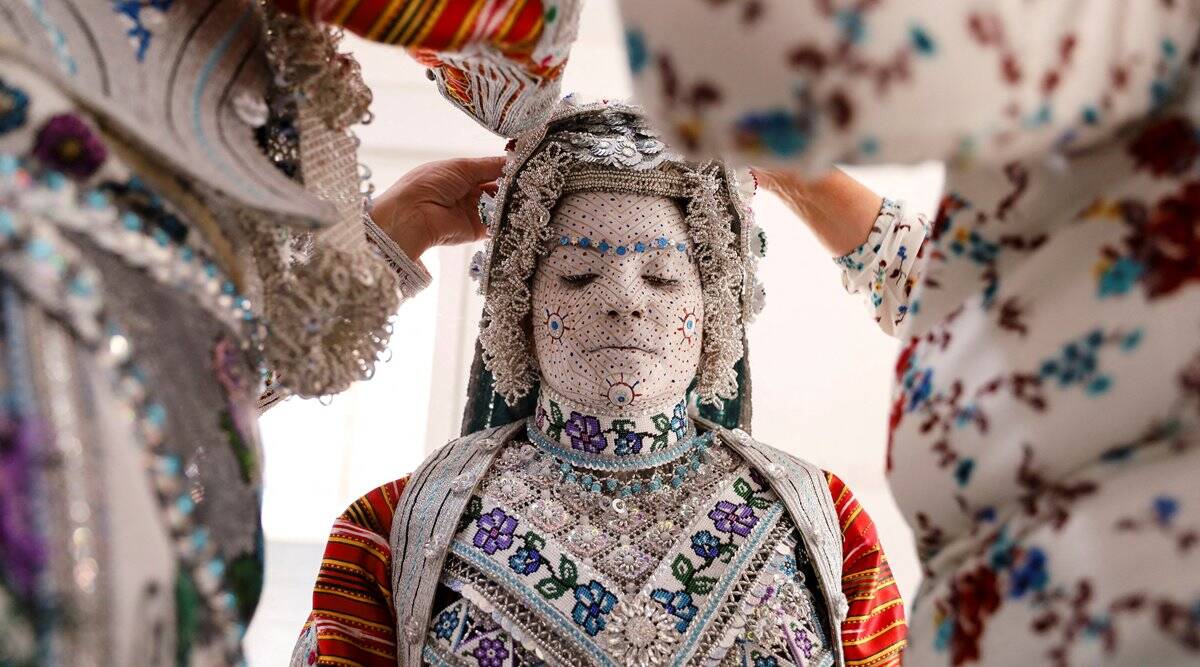
Bosniaks in the Kosovan community of Donje Ljubinje perceive wedding celebrations as artistic masterpieces.
Donje Ljubinje is an ethnically Bosniak hamlet with a population of 3,000, located in the Shar Mountains along the boundary between Kosovo and North Macedonia.
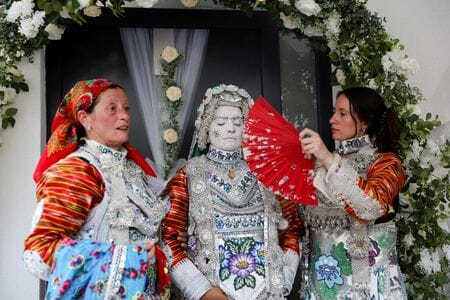
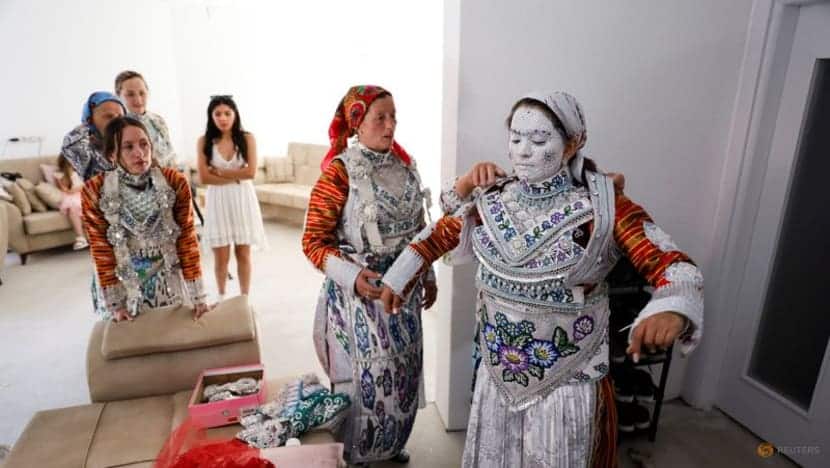
You will be astounded if you partake in a typical traditional nuptial in Donje Ljubinje, situated near Prizren. During these weddings, local women aid the bride in adorning herself in customary bridal garments.
The women of Donje Ljubinje partake in dance during the traditional wedding festivities.
In the Kosovo village of Donje Ljubinje, traditional weddings are a significant source of pride for the residents as they showcase the unique identity of their hometown. These lavish customs, which stretch back a millennium, are particularly renowned for the intricate facial painting that shields the bride from ill-fated marriages.
However, the beautiful essence of this culture and its time-honored practices face the risk of vanishing.
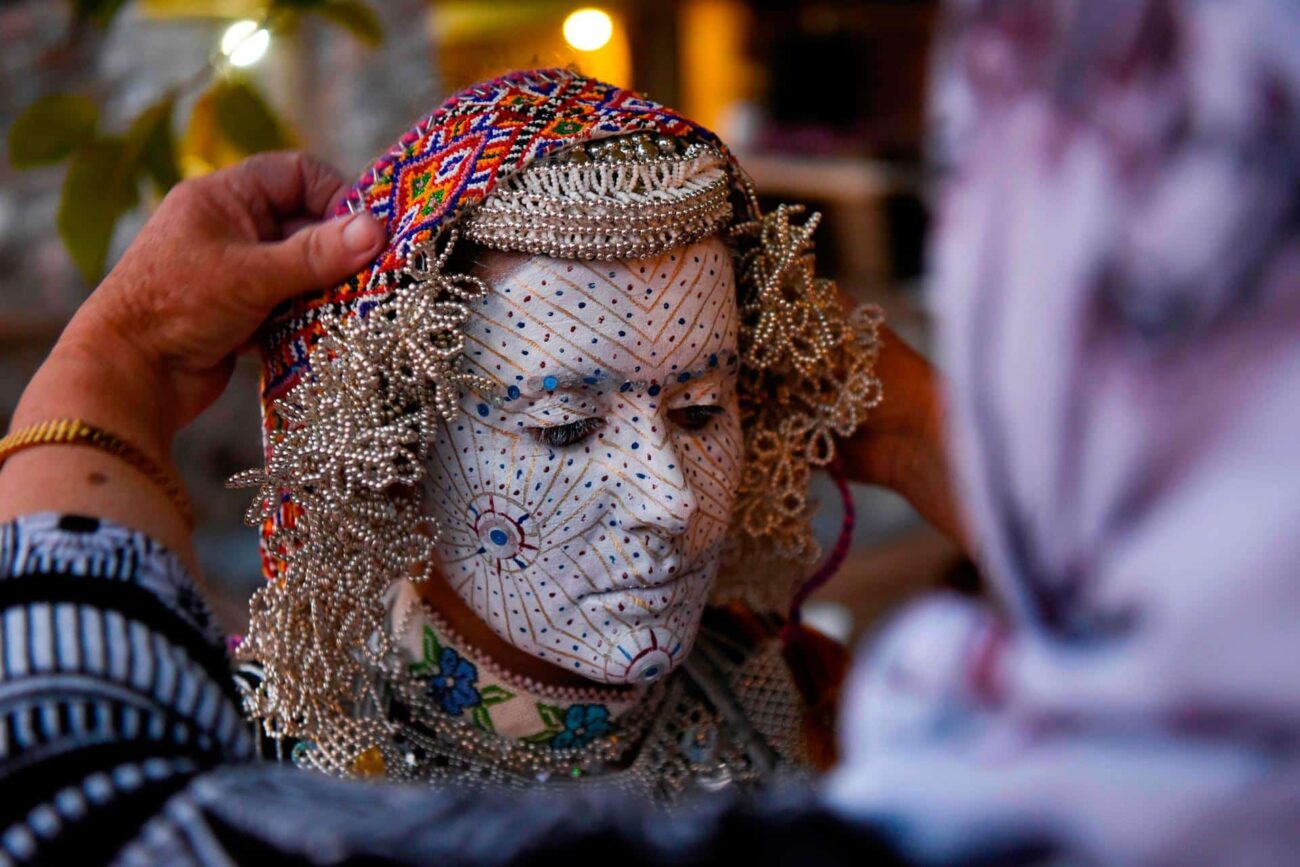
The facial paints are meticulously applied to deter misfortune from affecting the wedding. A distinguished individual in the community, celebrated for her expertise in traditional face art, initiates the painting of the bride’s face.
It is stated that there is merely one woman who performs the makeup, yet the number of couples desiring a traditional wedding diminishes each year.
The younger generations seem uninterested in mastering the application of these elaborate decorations, which would aid in preserving the community’s intangible heritage. Consequently, Sefitagic emerges as one of the last figures in Hamlet to execute this task.
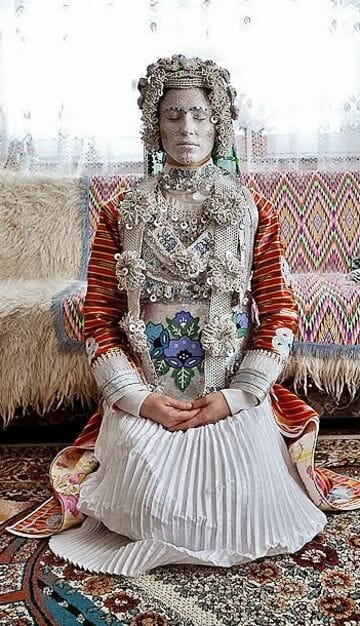
A bride is attired in customary garments from head to toe, and her face is painted white adorned with intricate red, blue, gold, and silver dots and sprays.
An elder woman applies makeup to the bride’s face during the ceremonial event while vibrant drum music resounds. Throughout the two hours required for painting her face, the bride is not permitted to open her eyes, engage in conversation, or consume food or drink. After the slaughter of a large bull, chefs prepare a banquet for the attendees.
Donje Ljubinje, which had approximately 3,000 residents two decades ago, has seen its population shrink by half due to emigration. The peak seasons for weddings are July and August, when many individuals with connections to the village return, often resulting in a wedding celebrated every day, and frequently twice a day.
The facial art applied to the bride holds great significance. The red circles symbolize fertility, while the three golden circles denote life stages, and the red and blue spots ensure the bride’s family life is joyful and healthy.
Furthermore, a notable aspect of the wedding is that it is a two-day festivity filled with music and dance, continuing a long-standing custom and highlighting a bride resplendent in traditional garments.
The economic outlook for Donje Ljubinje is grim. The age-old wedding traditions of the village are at risk of disappearing as nearly two-thirds of its inhabitants are currently forced to seek employment abroad in Europe. Traditional weddings in communities are becoming increasingly rare, as are the lavish facial decorations, which may soon be seen as obsolete.